Health and Safety Policy — Commercial Waste Shadwell Services
Policy Statement
 Commercial Waste Shadwell is committed to protecting the health, safety and welfare of all employees, contractors, and members of the public who may be affected by our operations. This policy sets out how we manage risks associated with the collection, transport and disposal of commercial rubbish and business waste across our service area. Our aim is to maintain safe systems of work, ensure legal compliance, and promote a culture where safety is integral to every activity.
We recognise that safe waste handling reduces injury, prevents pollution, and supports reliable service delivery for businesses relying on our commercial rubbish collection. Responsibilities are clearly allocated so that every role, from management to operatives and drivers, understands their duties in achieving safe outcomes. This policy is supported by detailed procedures, risk assessments and operational controls that apply to all waste streams including general commercial waste, recycling, and designated hazardous materials.
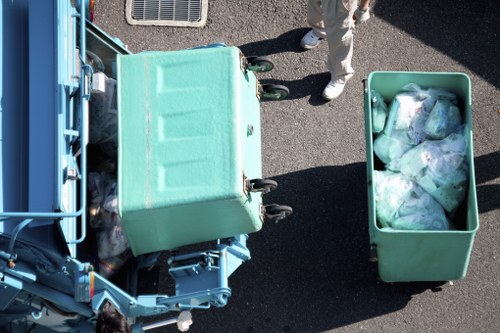 The scope of the policy covers all routine and non-routine tasks: container loading, handheld handling, compacting and vehicle operations, depot activities, site visits, and emergency response. It complements statutory requirements and industry guidance while remaining focused on practical measures for the local commercial waste market. The company will monitor developments in legislation and best practice and amend controls where necessary to maintain effective risk management for our commercial waste services.
Responsibilities and Management
The Director and senior management have overall responsibility for ensuring that policies, resources and structures are in place. Supervisors are responsible for day-to-day implementation, ensuring that staff receive appropriate instruction, information and support. Each employee must take reasonable care for their own safety and cooperate with safety systems. Employees must report hazards and incidents promptly so corrective actions can be taken.
 Risk assessments are carried out for all activities and reviewed regularly or when circumstances change. Key control measures include: PPE standards, mechanical aids for manual handling, secure vehicle loading procedures, safe routes for pedestrians at depots and client sites, and contamination avoidance measures for recycling streams. Training and competence checks are logged and updated, with refresher sessions scheduled to maintain standards.
Our operational controls include specific measures for commercial rubbish collection such as safe lifting techniques for sacks and bins, correct use of tail-lifts and tippers, and segregation protocols to reduce cross-contamination. The policy emphasises proactive hazard recognition and a permit-to-work process for high-risk tasks, including confined space access or dealing with unknown hazardous substances encountered during collections.
To support safety on the road, all drivers must adhere to daily vehicle checks, load securement rules, and fatigue management procedures. Journey planning and vehicle maintenance schedules aim to reduce breakdowns and incidents. There is a strict policy prohibiting mobile phone use while driving and a requirement for seatbelt use at all times. Accident prevention is a priority and driver training includes defensive driving and safe reversing protocols where appropriate.
 Waste categorisation and handling instructions are provided to clients and staff to manage commercial waste responsibly. Hazardous or potentially infectious waste identified at reception or curbside is isolated, documented and managed under safe containment procedures until it can be transferred to a suitable disposal facility. This reduces exposure risks for operatives and prevents environmental harm.
 Emergency procedures are defined for incidents such as spills, fires, or personal injury. Response plans include immediate containment, first aid provision, evacuation where necessary, and reporting to the relevant authorities. Incident reporting and investigation processes aim to identify root causes and introduce preventive measures, ensuring continual improvement.
Health and wellbeing is promoted through occupational health monitoring, access to support services, and campaigns on manual handling fitness and safe working practices. Regular toolbox talks and safety briefings reinforce awareness. Performance is measured through audits, safety inspections and key performance indicators that reflect near-miss reporting, training completion and incident rates.
We maintain records of risk assessments, training, certifications, vehicle checks and incident investigations. These records support accountability and allow trend analysis which informs targeted interventions. A clear procedure for reporting non-compliance, near misses and hazards ensures that all employees can raise concerns without fear of reprisal and that issues are addressed promptly.
Review and continual improvement underpin the policy: it is reviewed annually or after significant incidents, operational changes or legislative updates. The health and safety approach for our Shadwell-focused commercial waste operations balances practical controls with regulatory compliance to deliver a safe, reliable service for customers and a safe workplace for staff.
Commitment: This policy demonstrates our ongoing commitment to maintain safety standards across our commercial waste services. All personnel are required to read, understand and apply the policy as part of their employment conditions.
Signed / Adopted by Management
