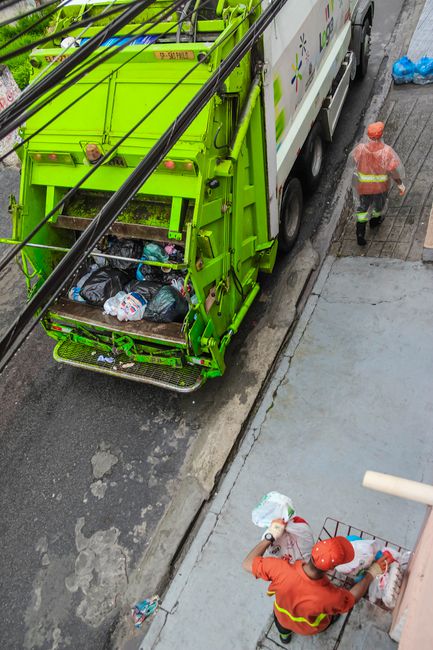
What to know about access issues for Hadwell waste removals
If you are booking a waste collection in Hadwell, access issues can make the difference between a smooth job and a messy, delayed one. Narrow stairwells, no parking outside, awkward basement steps, timed building entry, and busy London streets all affect how quickly a clearance can happen. What to know about access issues for Hadwell waste removals is less about jargon and more about planning the practical bits early, so the team arrives ready and the job gets done properly first time.
Truth be told, most access problems are avoidable. A little preparation helps more than people expect. In this guide, you will learn how access affects collections, what waste teams usually need to know in advance, where jobs often go wrong, and how to make the process easier whether you are clearing a flat, office, garden, or a building site. There is a fair bit to consider, but it is all manageable.
Table of Contents
- Why access matters for waste removals
- How access planning works
- Key benefits of getting access right
- Who needs this and when it makes sense
- Step-by-step guidance
- Expert tips for better results
- Common mistakes to avoid
- Tools, resources and recommendations
- Law, compliance, standards, or best practice
- Options, methods, or comparison table
- Case study or real-world example
- Practical checklist
- Conclusion
- Frequently asked questions
Why access matters for waste removals
Access sounds like a small detail, but in waste removal it can shape everything: timing, labour, safety, and sometimes cost. If a van can park close to the entrance, a crew can load quickly. If they have to carry bags down three flights of stairs, through a courtyard, or across a long internal corridor, the job takes longer and may need extra hands. That is not a complaint, just reality.
In Hadwell, as in much of London, access issues often come down to the built environment. Older terraces, converted flats, estate roads, limited stopping space, shared entrances, and loading restrictions can all create friction. On a wet morning, with bin bags waiting in a hallway and a lift that keeps getting used by neighbours, even a simple clearance can become a bit of a shuffle.
Why does this matter to you? Because clear access information helps the removal team arrive with the right vehicle, enough crew, the right equipment, and a realistic time plan. It also reduces the chance of surprise charges or delays. Nobody enjoys that awkward phone call where everyone realises the sofa will not fit through the stairwell. Been there, seen that, fixed it. Better to avoid it up front.
If your job includes broader property clearing, you may also want to look at house clearance or flat clearance options, because access questions often show up in those projects first.
How access planning works
Access planning is the simple process of matching the job to the site conditions. In plain English: can the crew get in, get the waste out, and get back to the vehicle without unnecessary obstruction? The answer determines the method.
A good provider will usually want to know things like:
- Whether the vehicle can stop close to the property
- How far items need to be carried
- How many stairs are involved
- Whether there is a lift, and whether it is usable for bulky items
- Whether there are gate codes, entry systems, concierge requirements, or timed access windows
- Whether the waste is inside, outside, in a loft, basement, garden, garage, or communal area
- Whether any items are too heavy, too large, or awkwardly shaped
That information helps the team decide whether a small van is enough, whether a larger team is needed, or whether the site will work better with a different collection approach. For example, a first-floor office clear-out in a building with an operational lift may be straightforward. The same job in a walk-up building with a tight staircase? Quite different story.
Some companies also ask for photos. That is not fussiness; it is useful. A few pictures of the access route can reveal more than a long phone description. A narrow front path, a sharp corner in the hallway, or a low ceiling in the basement can change the plan immediately.
What access problems usually look like on site
In real jobs, access problems usually appear in a few familiar forms:
- No parking space directly outside the property
- Shared entrances or security-controlled access
- Items stored in a top-floor loft or basement
- Long carry distances from the vehicle to the load point
- Very narrow doors, staircases, or corridors
- Restricted collection times in managed buildings
- Wet, icy, or cluttered exterior paths
A lot of these are manageable if they are known early. The problem is the surprise version. Nobody likes surprises when there is a fridge freezer on the landing and the driver is already looking at the clock.
Key benefits and practical advantages
When access is planned properly, the benefits are immediate and pretty obvious once you have seen both versions of a job.
- Faster completion: The crew spends less time navigating the property and more time clearing it.
- Better safety: Fewer awkward lifts, fewer collisions, fewer trips on stairs or uneven paths.
- More accurate pricing: The team can estimate labour and vehicle needs properly.
- Less disruption: Neighbours, staff, and residents are inconvenienced for less time.
- Lower stress: Everyone knows what is happening, which makes the day easier for you too.
- Fewer failed collections: A surprisingly common issue when access is assumed rather than checked.
There is also a subtler benefit: better respect for the building and the people in it. In a shared block or busy office, a tidy, efficient removal feels professional. Doors stay open for shorter periods, lifts are used sensibly, and everyone can get on with their day.
If you are comparing waste services more broadly, pages like waste removal and pricing and quotes can help you understand how access affects estimates and service options.
Who this is for and when it makes sense
This matters to almost anyone arranging collection in Hadwell, but it is especially relevant if your property has constrained access or you are clearing bulky items. You will notice the need quickly if any of the following sounds familiar.
- You live in a flat with stairs but no lift
- Your office is in a shared building with controlled entry
- Your shop, cafe, or unit has rear loading only
- Your garden waste sits at the bottom of a long side passage
- You are clearing builders' debris from a renovation site
- You need same-day collection and time is tight
- You manage multiple occupants or tenants in the same building
It also makes sense for landlords, letting agents, facilities teams, and small businesses. In those settings, access information is often scattered across emails, old building notes, and the memory of one person who is, inconveniently, on holiday.
For commercial sites, access planning becomes even more important when vehicles, staff movements, and customer flow are all happening at once. If that is your situation, business waste removal or office clearance may be the most relevant starting points.
Step-by-step guidance
Here is the practical way to handle access issues without overcomplicating things.
- Walk the route first. Start at the waste item and follow the path to the exit and the vehicle location. Look for stair turns, narrow points, low ceilings, locked doors, and any loose flooring or trip hazards.
- Measure the obvious pinch points. Door widths, stair width, and lift opening size matter. You do not need a surveyor's report. Just enough to avoid the "it nearly fits" conversation.
- Check parking and stopping options. Can a van stop nearby? Is there loading only, pay-and-display, private land, or a permit zone? A few minutes here saves a headache later.
- Identify building rules. Some blocks require booking a lift, booking a loading bay, or using a service entrance. Managed buildings are often fine, but they do have procedures.
- Separate the waste by type if you can. Bulky furniture, bags, appliances, and mixed rubbish may need different handling. This is especially useful where access is limited and the team must work efficiently.
- Take photos in daylight. Morning light shows the route better than you might think. A quick photo of the front access, stairwell, and items can tell the full story.
- Share any special restrictions early. If there are time windows, neighbour sensitivities, noise concerns, or security rules, say so. No one likes discovering those on arrival.
- Confirm the collection plan. Make sure you understand whether the team will remove items from inside, from the kerb, from a rear alley, or from a loading area.
A sensible rule of thumb: if you would need to explain the route to a delivery driver, you should probably explain it to the waste team too. It is the same kind of problem, just with more lifting.
A quick example of the planning process
Say you are clearing a second-floor flat with a narrow staircase and no parking directly outside. You might still be absolutely fine for collection, but the team needs to know whether there is a close loading point, whether the sofa can turn on the landing, and whether the lift is available for smaller items. That changes the crew size and the time estimate. A tiny bit of forethought, really.
Expert tips for better results
After enough collections, a few patterns become very clear. The jobs that go smoothly tend to have the same habits.
- Be specific, not vague. "Access is tight" is less helpful than "two flights of stairs, narrow turn at the first landing, no lift."
- Clear the route before the crew arrives. Moving shoes, mats, bicycles, or loose boxes out of the way can save time and reduce risk.
- Keep key access details in one message. Gate code, contact name, parking note, and floor level should be easy to find. Do not make people hunt through three different texts.
- Think about the return journey. It is easy to focus on getting items out of the property and forget that the route back matters too, especially in shared corridors or service yards.
- Flag awkward items early. Pianos are the classic example, but large wardrobes, cast-iron radiators, and heavy gym equipment can also be troublesome.
- Have a backup plan for parking. A nearby side street or loading bay may work if the first option is blocked.
One small but useful tip: if you are in a building with neighbours, tell them the collection window. It saves the awkward moment of someone wheeling a buggy through the one corridor you are trying to use. Social harmony, and all that.
For large or awkward household items, services such as furniture clearance and mattress and sofa disposal are worth reviewing because bulky item handling often depends on access as much as the item itself.
Common mistakes to avoid
The most common access mistakes are usually not dramatic. They are small assumptions that snowball.
- Assuming "it will be fine." Maybe it will, but maybe not. Access should be checked, not guessed.
- Forgetting the parking reality. A property that looks easy on a map may be frustrating on the ground.
- Not mentioning stairs or lift issues. This is one of the biggest causes of delay.
- Leaving everything until the day of collection. That is when stress tends to appear, right on cue.
- Mixing hazardous or specialist items with general waste. Some items need separate handling and should never be hidden in a general pile.
- Underestimating carry distance. Ten metres feels like nothing until you repeat it twenty times with bags and boxes.
A more subtle mistake is not thinking about the property type. A house clearance, for instance, may seem straightforward until you realise the loft hatch is small, the staircase is steep, and the driveway belongs partly to the neighbour. If you are dealing with a larger domestic job, loft clearance and home clearance pages can be useful reference points for the practical side of the work.
Tools, resources and recommendations
You do not need fancy kit to prepare properly. A phone, a tape measure, and a clear head are usually enough. Still, a few tools make the process easier.
- Phone photos or video: Best for showing stairwells, gates, basements, and narrow corners.
- Simple measuring tape: Helpful for doorways, appliance gaps, and turning space.
- Building access notes: Keep gate codes, concierge hours, and loading instructions written down.
- Inventory list: A basic list of items helps the team estimate labour and vehicle space.
- Weather awareness: Rain, ice, and wind can change access conditions quickly, especially on external stairs or exposed loading areas.
If you need a better feel for the service style and standards behind the work, it is sensible to review pages like about us, insurance and safety, and health and safety policy. Those pages help build confidence in how a provider approaches site risks and customer care.
For customers who want to book efficiently, book online can be a practical next step once access details are clear. Nice and simple, which is honestly how it should be.
Law, compliance, standards, or best practice
Access issues are not just a convenience topic. They also touch on safety and responsible handling. In the UK, waste carriers and removal teams are expected to manage loads safely, avoid unnecessary hazards, and handle different waste streams appropriately. You do not need to become an expert in the law, but it helps to understand the shape of best practice.
For example, bulky items should be moved in a way that reduces risk to workers and property. That means not forcing oversized items through tight openings, not blocking shared escape routes, and not creating unsafe piles in communal spaces. If a route is genuinely unsuitable, the sensible answer is to plan differently rather than push through and hope for the best. That last part rarely ends well.
Hazardous or specialist waste should be identified early. Things like chemicals, asbestos-related materials, or items with contamination risks may require separate treatment. The same goes for confidential materials in offices, where secure handling matters. In those cases, access planning is only part of the picture, but it still matters because the collection method depends on the environment.
Good providers also work with internal policies covering insurance, safety, privacy, and complaints handling. Those documents are not just paperwork for show; they tell you how seriously the company takes risk, communication, and accountability. If you are weighing up providers, it is fair to ask about these standards before anyone turns up at the door.
For specialist disposal needs, the relevant pages may include hazardous waste disposal, confidential shredding, and recycling and sustainability. Those services often need a bit more planning because access and handling rules intersect.
Options, methods, or comparison table
There is more than one way to deal with an access-sensitive removal. The best method depends on the property, the waste type, and how quickly the job needs doing.
| Method | Best for | Access needs | Typical advantage |
|---|---|---|---|
| Full in-property collection | Flats, houses, offices, mixed clear-outs | Team must reach waste inside the building | Convenient for the customer, less lifting for you |
| Curbside or front-of-property pickup | Bagged waste, smaller items, pre-staged loads | Vehicle access or easy handover point | Fast and simple if parking is available |
| Rear access collection | Properties with back alleys, service yards, or garden gates | Gate width, path condition, and security access matter | Often avoids front-door congestion |
| Multi-crew bulky removal | Sofas, mattresses, white goods, awkward furniture | Needs enough room to turn and carry safely | Better for heavy items and tighter routes |
Which option is best? That depends on the site. A front-of-house collection may be ideal for a terraced property with decent pavement space, while a rear-access pickup might work better for a business unit tucked behind a main street. There is no single winner. The point is to match the method to the reality on site, not the ideal version in your head.
For bulky or restricted access jobs, it can also help to compare related services like garage clearance, builders waste clearance, and office clearance depending on the setting.
Case study or real-world example
Here is a realistic example from the sort of job that comes up all the time. A small professional office in Hadwell needed desks, chairs, boxed paperwork, and a broken printer removed before a refurbishment. On paper, straightforward enough. But the building had a timed loading bay, a lift that could not take oversized items, and a reception policy requiring visitors to sign in and wait for a staff escort.
If the team had arrived without those details, the first twenty minutes would have been spent sorting logistics instead of clearing waste. Instead, the client shared the access instructions early, provided a few photos, and confirmed the loading time window. The result was a tidy collection with far less disruption than expected. A little planning made the whole thing feel calmer. Even the hallway smelled less like stale coffee by the end, which helped everyone.
Another common example is a top-floor flat clearance. The waste may be manageable in volume, but the access route does the heavy lifting, so to speak. A sofa that needs to be turned on a narrow stair landing, or a fridge that just will not fit round the corner, can quickly change the labour needed. The better the information, the more accurately the job can be planned.
Practical checklist
Use this simple checklist before collection day.
- Have you confirmed the exact collection address and entry point?
- Is there parking or stopping space near the property?
- Do you know whether the waste is on the ground floor, up stairs, in a loft, or in a basement?
- Have you checked for narrow doors, tight stair turns, or low ceilings?
- Are there any building rules, concierge steps, or access codes?
- Have you mentioned bulky items, heavy items, or awkward items?
- Are any items hazardous, confidential, or specialist?
- Have you sent photos if the site is hard to describe?
- Do neighbours, staff, or residents need notice?
- Have you confirmed the collection method and expected timing?
If most of those are sorted, you are in very good shape. If a few are not, that is fine too; just address them before the crew arrives. It is much easier to solve access issues in daylight than while somebody is standing in a doorway with a trolley, trust me.
Conclusion
Access issues are one of the most practical parts of arranging waste removal, and one of the easiest to overlook. In Hadwell, where streets, flats, offices, and shared buildings can create all sorts of little obstacles, the safest and smoothest approach is simple: check the route, share the details early, and choose a service that understands the site conditions.
When access is handled well, the whole experience feels easier. The team works faster, the property stays safer, and the day loses a lot of unnecessary friction. That is the real value here. Not a fancy process, just a sensible one.
If you are ready to move forward, it usually helps to compare service fit, access needs, and item type before booking. And if you want to keep things straightforward from the start, use the pages above to review the service details, then plan the collection around the route rather than hoping the route will cooperate. It usually does not, not without a little help.
Get a free quote today and see how much you can save.
Frequently Asked Questions
What are access issues in waste removal?
Access issues are the practical obstacles that affect how a removal team reaches your waste and gets it out safely. Common examples include stairs, narrow doors, parking limits, security gates, long carry distances, and blocked walkways.
Why do access issues affect the price?
They can affect labour time, team size, and vehicle choice. If items are easy to reach, the job is usually quicker. If the crew has to carry waste a long way or navigate stairs, the work takes more effort and planning.
Do I need to mention stairs when I book?
Yes, absolutely. Stairs are one of the biggest factors in planning a collection. Even a short staircase can matter if the items are large, heavy, or awkward to turn.
What if there is no parking outside my property?
That is still often manageable, but it should be mentioned early. The team may need to plan for a nearby loading point, a different arrival time, or extra carrying distance.
Can waste be collected from a flat with no lift?
Usually yes, depending on the items and the staircase. Smaller bagged waste is often straightforward, while bulky furniture or appliances may need more careful planning.
Should I send photos before the collection?
If the access is anything other than straightforward, photos are very helpful. A few clear pictures can prevent misunderstandings and make the quote more accurate.
What items are most affected by access problems?
Bulky furniture, mattresses, appliances, wardrobes, and heavy office equipment are the usual troublemakers. They are not impossible, just more sensitive to tight corners and narrow routes.
What happens if access is worse than I expected?
The team may need to adjust the plan, request extra labour, reschedule, or, in some cases, leave the job incomplete if it cannot be done safely. That is why honest access details matter so much.
Are access details important for business waste removal too?
Very much so. Commercial buildings often have loading restrictions, security procedures, and busy shared spaces, so access information is often even more important than in residential jobs.
How can I make a collection faster?
Clear the route, share exact access details, prepare any gate or entry codes, and separate waste where possible. A tidy route and a clear plan make a bigger difference than most people expect.
Do I need to worry about hazardous items separately?
Yes. Hazardous or specialist waste should always be flagged in advance so it can be handled correctly. It should not be mixed in with ordinary rubbish or hidden in a general load.
What is the best first step if I am unsure about access?
Walk the route from the item to the vehicle and note any tight spots, stairs, or restrictions. If you are still unsure after that, share photos and a brief description before booking. That usually clears things up quickly.